Start with the purchase price, but look inside the box
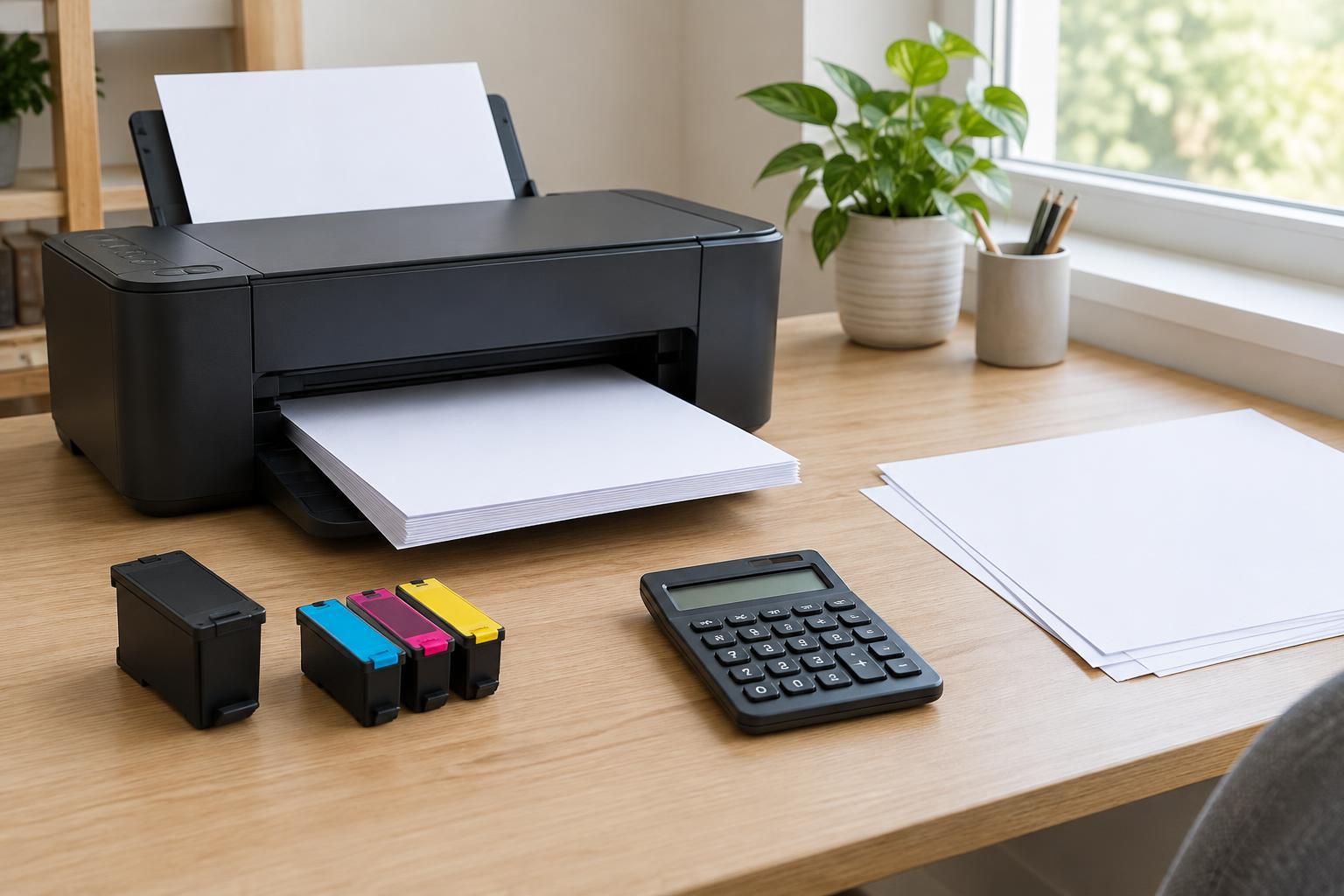
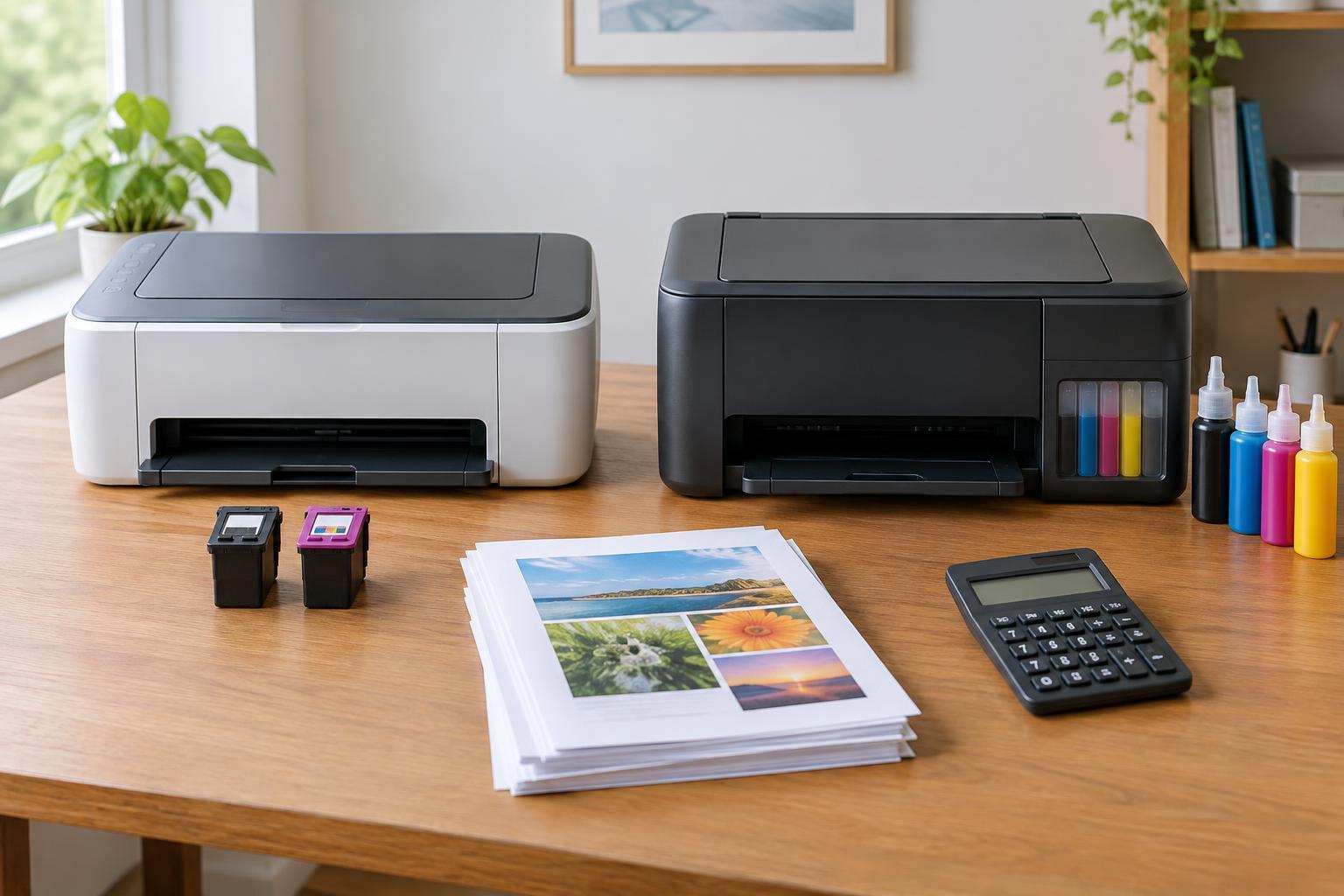
Cartridge printers typically have a lower purchase price than comparable refillable ink tank models. That makes them appealing when you need a printer now and have a limited equipment budget. An ink tank printer asks you to spend more at the outset in exchange for ink supplied in bottles, which may reduce the cost of future refills. Neither price tells you the full cost of ownership on its own.
Check what each printer includes before comparing shelf prices. A cartridge model may ship with starter cartridges that contain less ink than standard replacements. An ink tank model may include bottles intended to fill its tanks, with some ink remaining for later use. The contents vary by model, so compare the supplied ink, replacement prices, and any accessories you need, such as a USB cable or scanner features. A cheaper printer is not necessarily the cheaper setup.
Estimate ongoing ink costs from your own printing
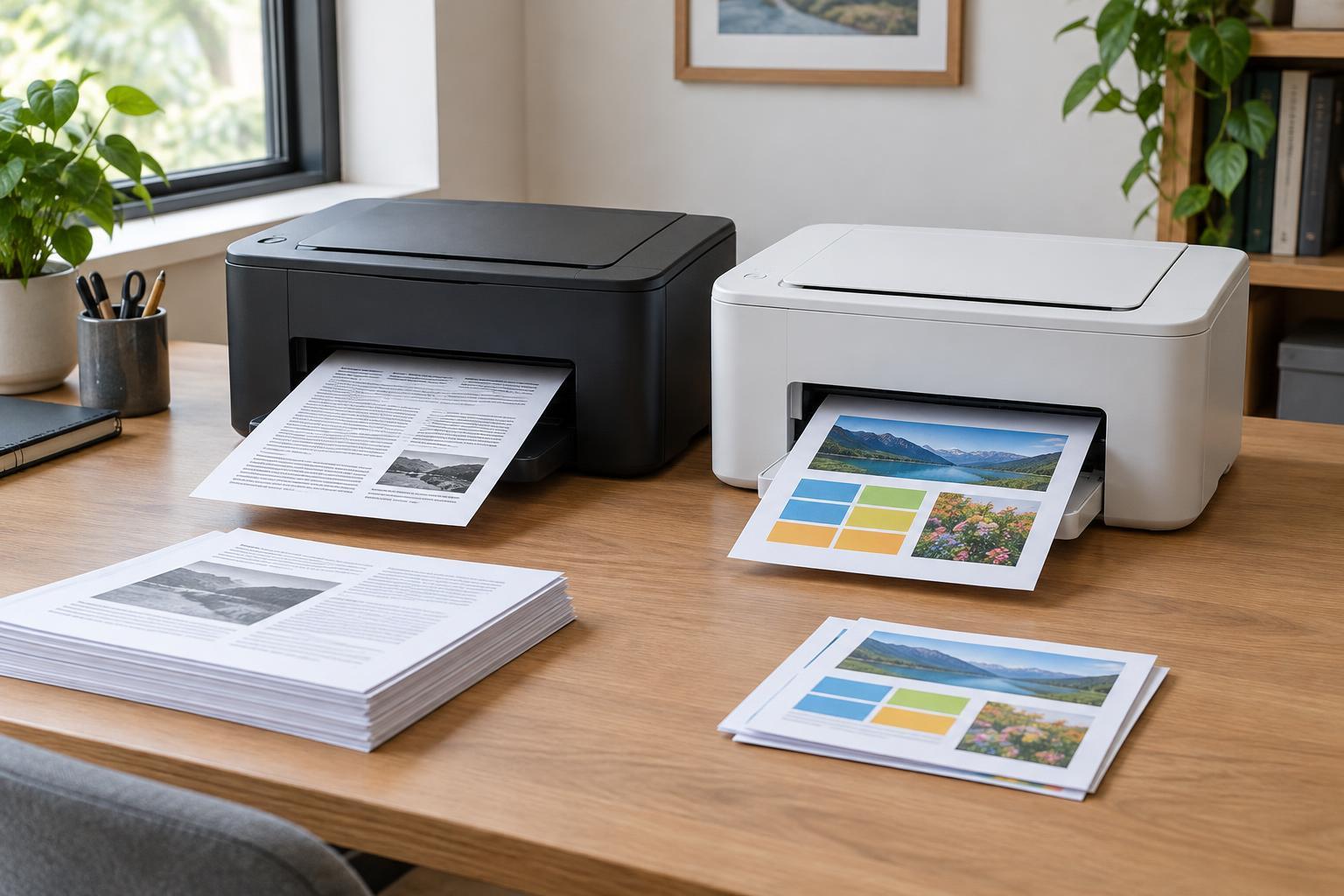
The most useful comparison begins with a rough estimate of your monthly pages. Separate ordinary black text from color documents and photos, since heavy color coverage uses more ink than a lightly printed page. Then look up the prices and stated page yields of compatible replacement cartridges or bottles for the specific models you are considering. Dividing ink price by stated yield gives a starting cost per page, not a guarantee: actual use depends on page coverage, print settings, cleaning cycles, and other factors.
For a closer estimate, consider each color separately. A printer can require you to replace or refill one color sooner than the others, especially if your documents use a lot of one shade. Also check whether a cartridge printer uses a combined color cartridge or separate colors. With a combined cartridge, one depleted color may prompt replacement even when ink remains in the others. Bottles generally let you refill individual tanks, but they still need to be bought, stored, and handled.
Find the point where a tank model pays back its higher price
To compare two models, add each printer’s purchase price to the ink you expect to buy over the same period. Include paper only if the printers would use different types or amounts; otherwise, it will not change the comparison. If the tank model costs more initially but has a lower estimated ink cost per page, divide the extra purchase cost by the estimated savings per page. The result is a rough break-even page count.
For example, you do not need to predict your printing perfectly. Calculate one scenario for a quiet month and another for a busy month, then ask whether reaching the break-even count seems realistic during the years you plan to keep the printer. If you print only occasional forms and labels, the lower-cost cartridge model may remain the less expensive choice. If you regularly print packets, worksheets, or color handouts, lower refill costs may matter more. Recheck the calculation if one option needs features the other lacks.
Account for maintenance and infrequent use
Inkjet printers may use ink for maintenance as well as for pages. When a printer sits unused, its printhead may need cleaning to restore output quality, and cleaning can consume ink. Refilling a tank does not eliminate that behavior. Before buying either type, check the model’s maintenance guidance, warranty terms, and the price or availability of replaceable parts, if any. An unusually low bottle or cartridge price is less helpful if an important repair would be costly.
Think about the work involved, too. Cartridges are usually straightforward to swap, although they create more frequent small replacements for some users. Bottles can make refills less frequent, but pouring ink calls for care and a suitable place to store opened supplies. If you print rarely, do not assume a large ink supply will automatically save money: you still need to consider whether the printer suits your pattern of use.
Choose by total value, not ink price alone
Make a short list of the features you actually need: automatic two-sided printing, an automatic document feeder for scanning, wireless setup, paper capacity, and acceptable output for your typical documents. Compare models that meet the same requirements. A printer that saves on ink but slows down a frequent scanning task may be poor value for your workspace.
A cartridge printer is often a sensible starting point for a tight upfront budget or modest printing needs. A refillable ink tank is worth a closer look when you expect steady use and can recover its higher purchase price through lower ink spending. Keep your estimates simple, use prices for the supplies each specific model accepts, and leave room for your habits to change. That gives you a more useful decision than judging either printer by its box price alone.