Start with the documents you actually staple
A stapler is easy to overlook until it jams halfway through a packet or cannot reach the spot where a staple belongs. Before choosing one, note the kinds of jobs it will handle: a few loose pages, thick handouts, booklets, or repeated batches of similar documents. Also consider who will use it. A shared stapler may need to be simple to reload and comfortable for people with different grip strengths.
Pay particular attention to capacity claims. A stapler’s stated sheet capacity is a useful comparison point, but results can vary with paper thickness and the staples used. If your typical job is close to a model’s stated limit, a higher-capacity option may be less frustrating. For a shared workspace, keeping a small sample of the usual paper nearby can help you check whether a prospective stapler fits the task.
Match the mechanism to the job
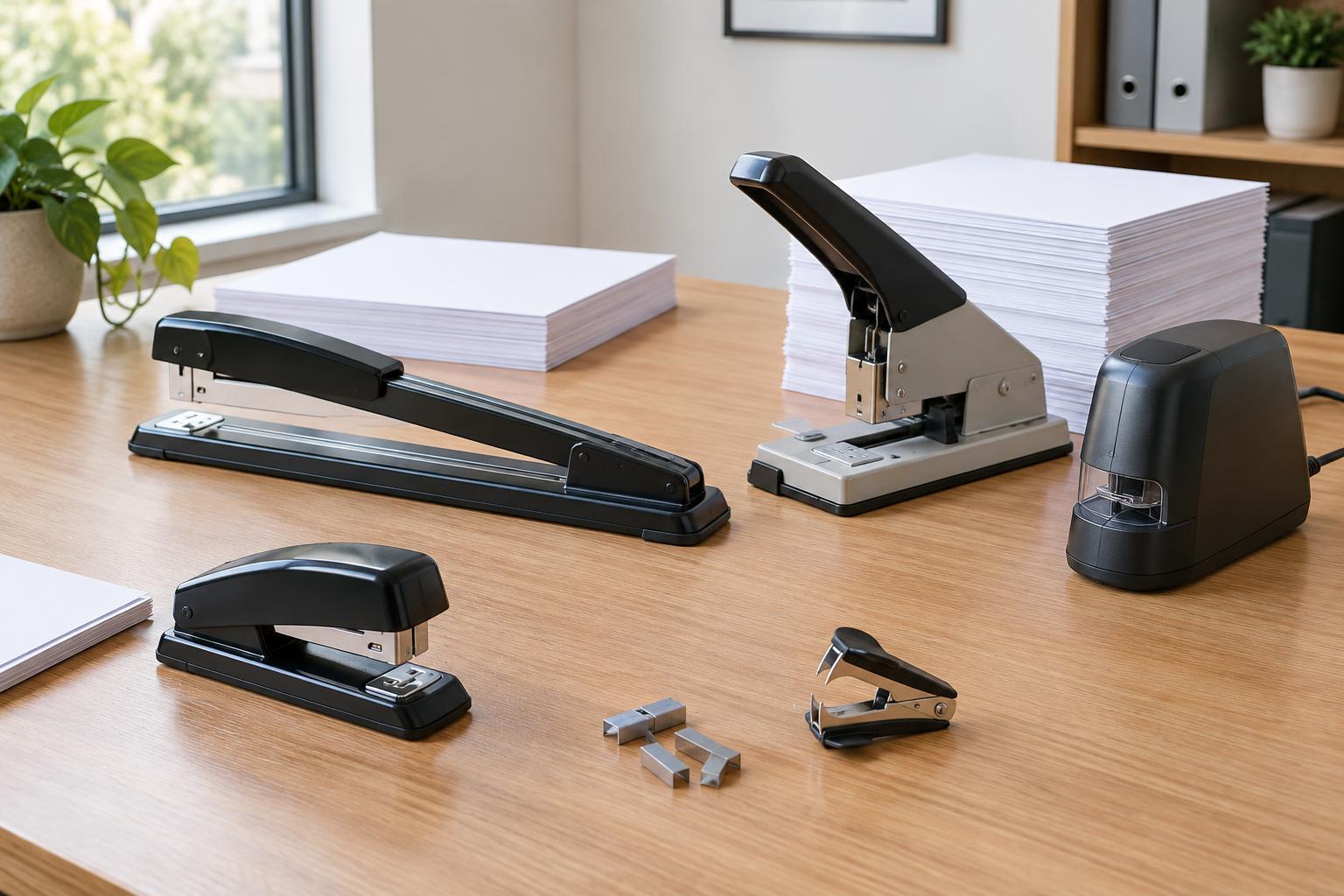
A standard desktop stapler suits occasional packets of ordinary office paper. Many open for tacking pages to a soft surface, although that feature matters only if you plan to use it. A plier stapler is held in the hand and can be convenient when fastening labels or stacks that are awkward to place on a desk. For either style, check that the grip feels comfortable and that the stapler sits or closes securely during use.
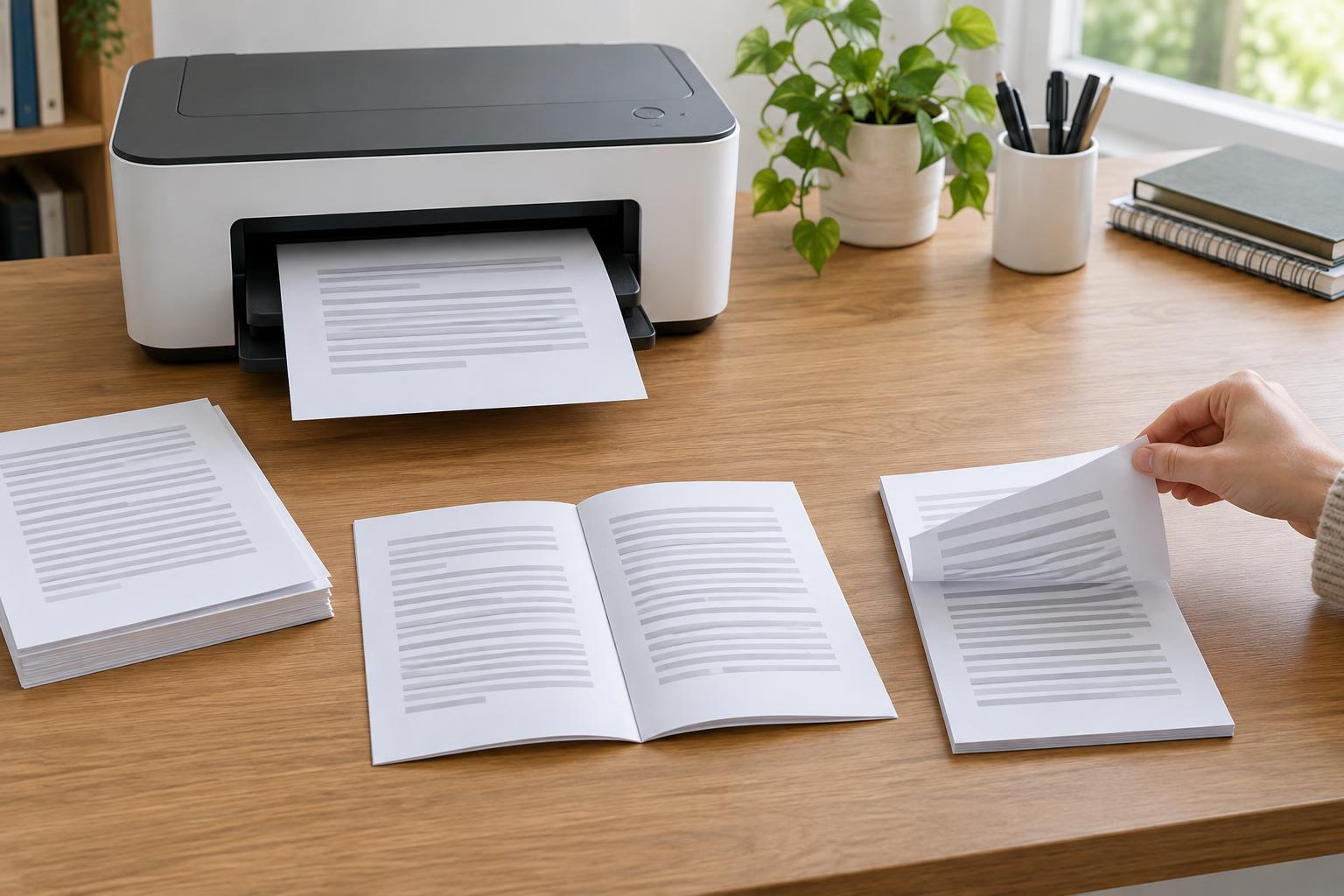
A long-reach stapler lets you place a staple farther from the paper’s edge. It is useful for folded booklets and other work where a standard stapler cannot reach the center fold. Look for an adjustable paper stop if you need to repeat the same placement. Long reach does not necessarily mean high sheet capacity: check both features separately rather than assuming one implies the other.
Know when heavy-duty or electric makes sense
A heavy-duty stapler is designed for thicker stacks than a typical desktop model. It often uses different staples, sometimes in several leg lengths to suit different stack thicknesses. Before buying, check the stapler’s specified staple sizes and consider whether you can store the right supplies without mixing them up. A thick stack also needs enough clear space beneath the stapling head to sit flat.
An electric stapler can reduce the repeated hand pressure involved in stapling batches. Some models activate when paper is inserted, which can make a consistent workflow easier. The trade-offs are the need for power, a fixed location or battery management, and a mechanism that may be less convenient to clear when it jams. For occasional use, a comfortable manual model may be simpler.
Check the details that prevent everyday frustration
Staple compatibility deserves as much attention as the stapler itself. Staples that look similar may differ in width, leg length, or wire shape. Use the sizes specified for the model, and keep the packaging or a clear label with spare boxes. If several staplers share a supply cabinet, choosing models that take the same staple type can simplify restocking—but only if that type suits every stapler’s intended job.
Look at how the stapler opens and how easily you can see or access a jam. A refill window or visible staple track can make it easier to tell when supplies are low. A stable base helps with accurate placement, while an adjustable throat or paper guide helps when consistency matters. These small features may be more valuable in daily use than a capacity you rarely need.
Set up a simple stapling station
Place the stapler on a firm, clear surface with room to align pages. Square the stack before stapling, and avoid forcing in more sheets when the stapler resists. If staples bend instead of closing properly, check the staple size, the stack thickness, and whether the stapler is fully loaded and seated. Unplug an electric model before attempting to clear a jam, and follow its instructions for opening the mechanism.
For many small offices, one reliable desktop stapler covers daily work, with a specialized model added only for a recurring task such as booklet making or thick packets. That approach keeps supplies and storage manageable. Choose around the job you perform regularly, then check capacity, reach, staple requirements, and ease of reloading before deciding.