Give packing its own space
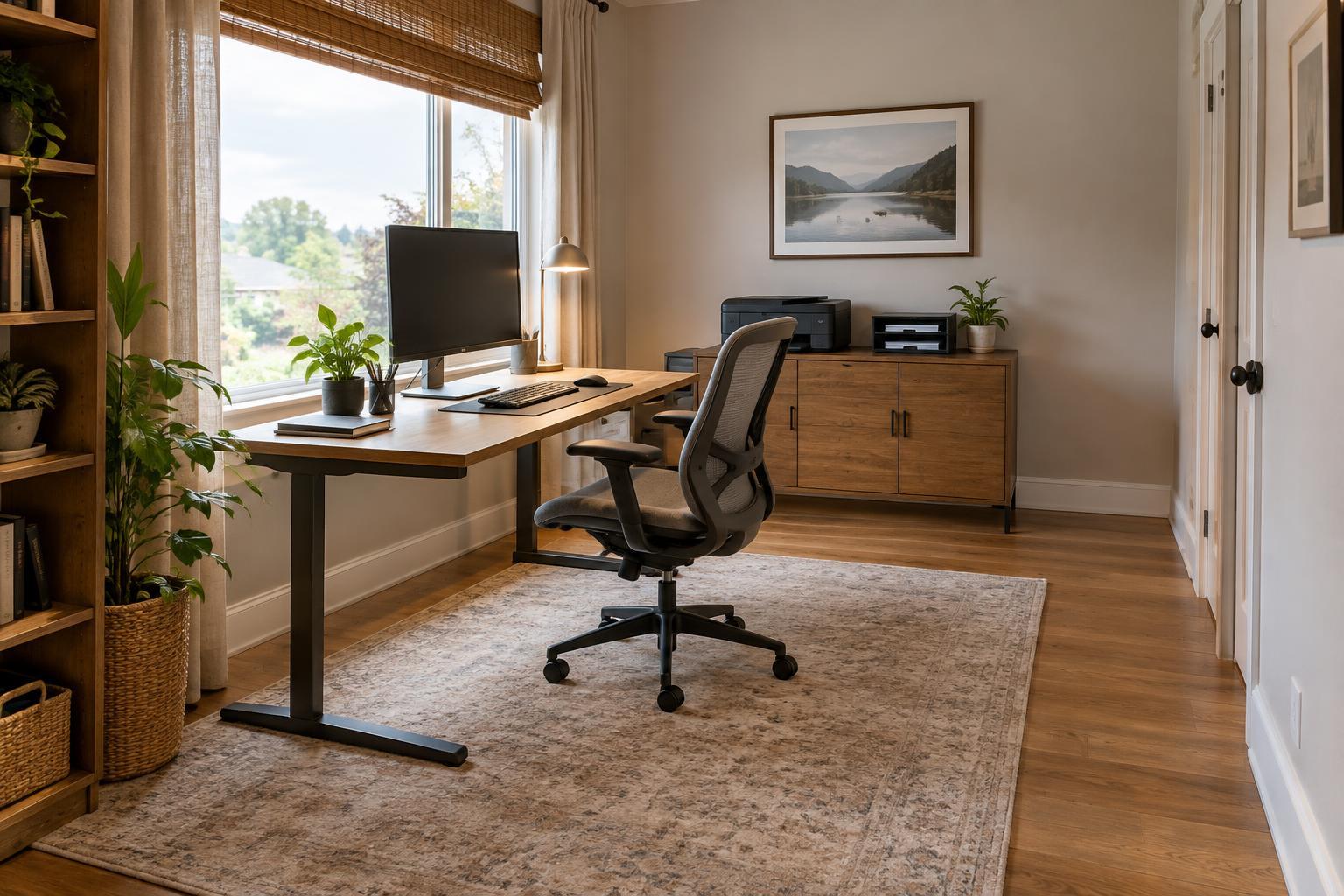
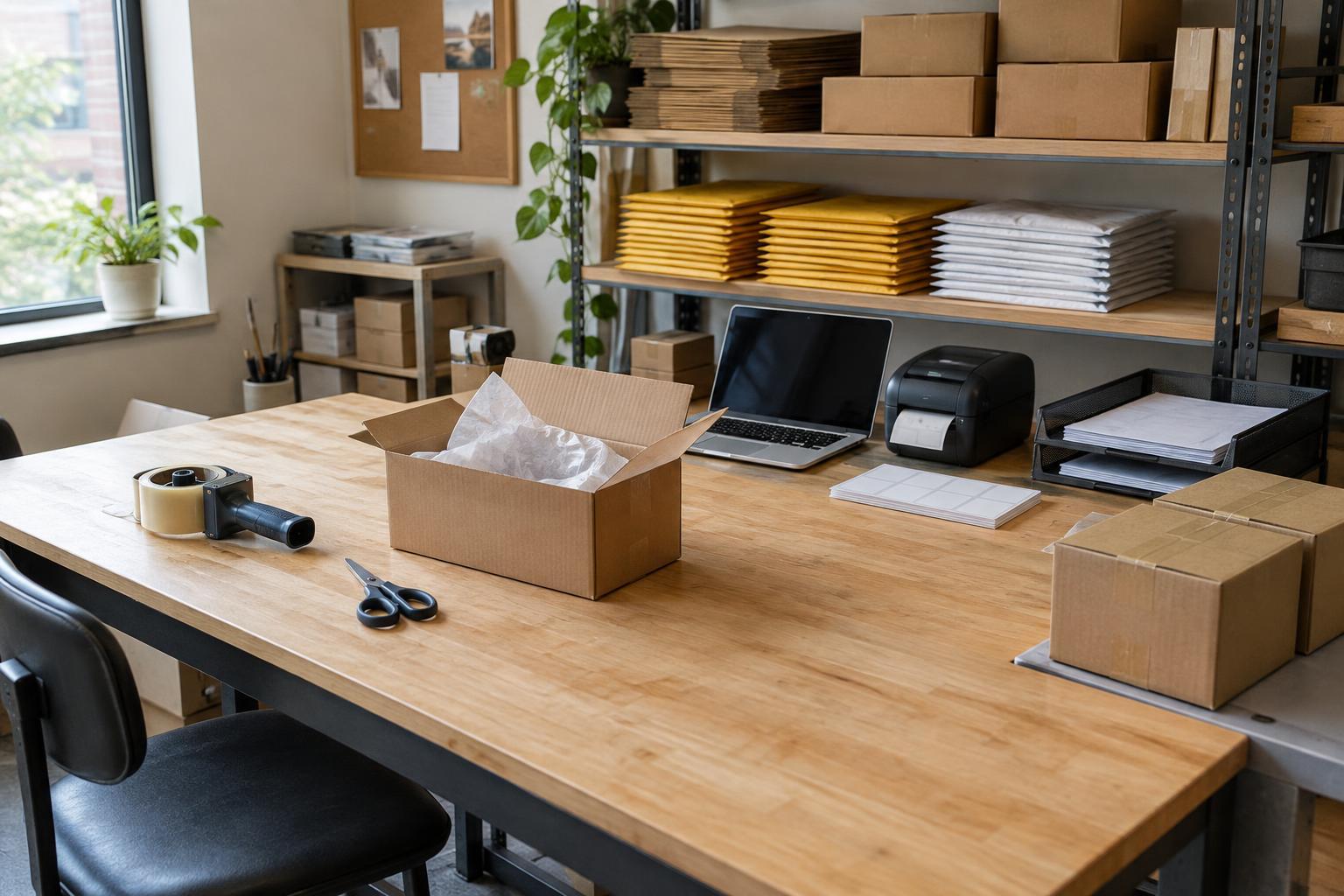
If you pack orders, samples or documents regularly, using your main desk for every parcel can interrupt other work. Tape, boxes and finished packages compete with your keyboard and papers. A dedicated station does not need a separate room: a small table, sturdy counter or clear section of a work surface can be enough. The aim is to leave a reliable place where a parcel can be opened, filled, sealed and labeled without moving unrelated work first.
Choose a location with a clear route to both supply storage and the place where outgoing parcels wait. Check that you can move around the surface while holding a box, and leave room to set a parcel down before you pick up a tool. If the station shares a room with calls or focused work, consider whether packing noise will be disruptive. You may prefer to schedule packing in batches rather than leave the whole office arranged around it.
Arrange the surface around the order of work
Think through a typical parcel from start to finish. You need space for the item and its paperwork, room to add protective material, a place to seal the package, and a clear spot for weighing or labeling. Keeping those steps in a consistent order makes it easier to see what is ready and what still needs attention. On a narrow table, work from one end to the other; on a wider surface, use a clear central area and keep tools along the edges.
Store your most-used tape, scissors, pens and labels within easy reach, but not in the area where you lay out an open box. A shallow tray or tool holder can stop small items from spreading. Put less-used box sizes and spare supplies on a nearby shelf rather than on the work surface. Keep sharp tools in a stable holder or drawer when they are not in use, especially if others share the space.
Choose storage that matches what you ship
Before buying containers or shelving, look at the supplies you actually use. Flat mailers may fit in a vertical file holder, while boxes need space that keeps them accessible without blocking the floor. Dividers can separate sizes so you do not have to unpack a stack to find one box. Keep frequently used materials close to the station and bulk reserves elsewhere if space is tight.
Avoid filling every shelf at the start. A little open space gives you somewhere to put a new supply without piling it on the table. If you reuse clean packing materials, give them a defined bin and remove pieces that are no longer suitable. This keeps reusable material available without letting it overtake the station. For a change of pace after planning your workspace, browse Armour and Craftsmanship · Arms and Armour Journal for reading on a different topic.
Make labels and paperwork easy to check
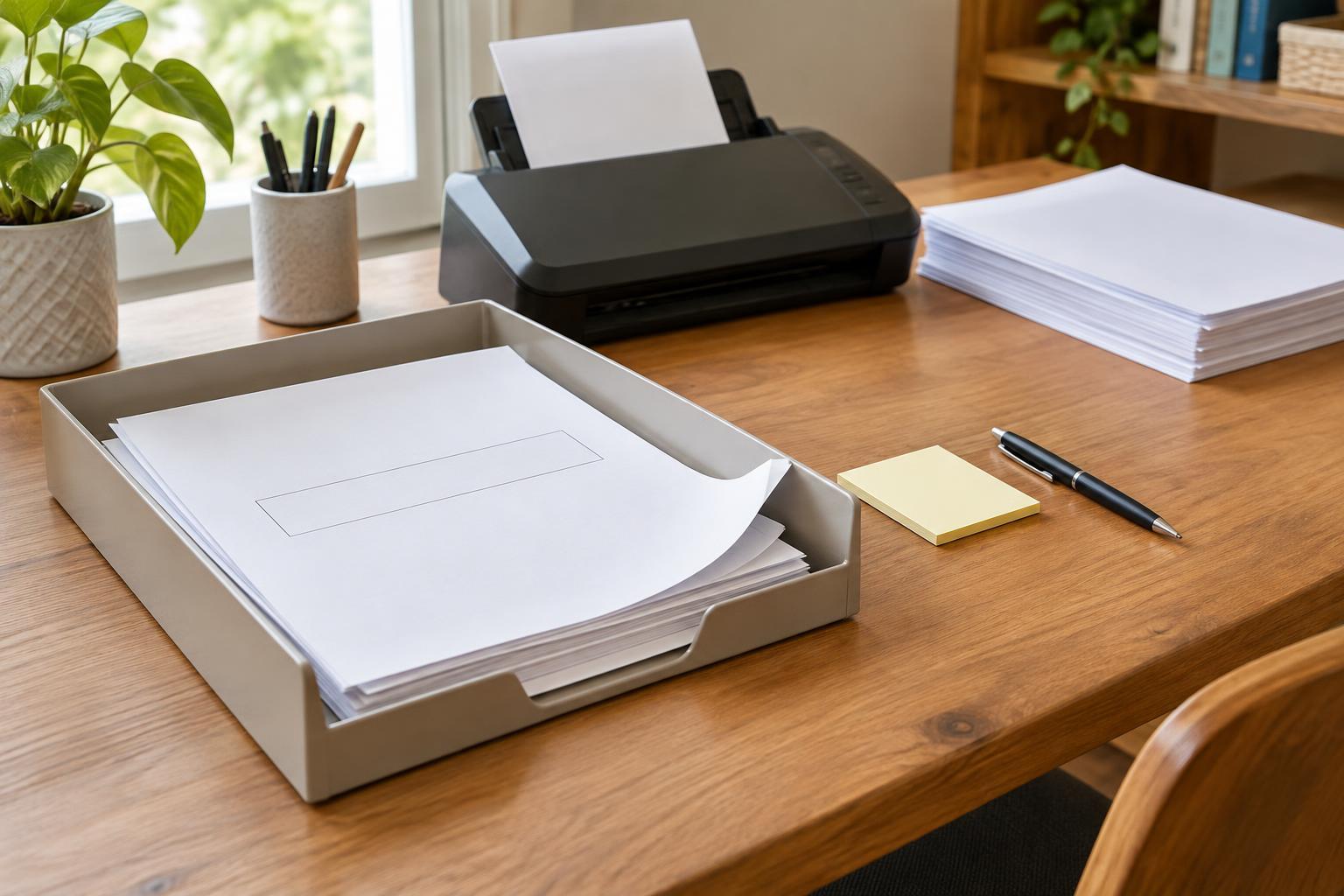
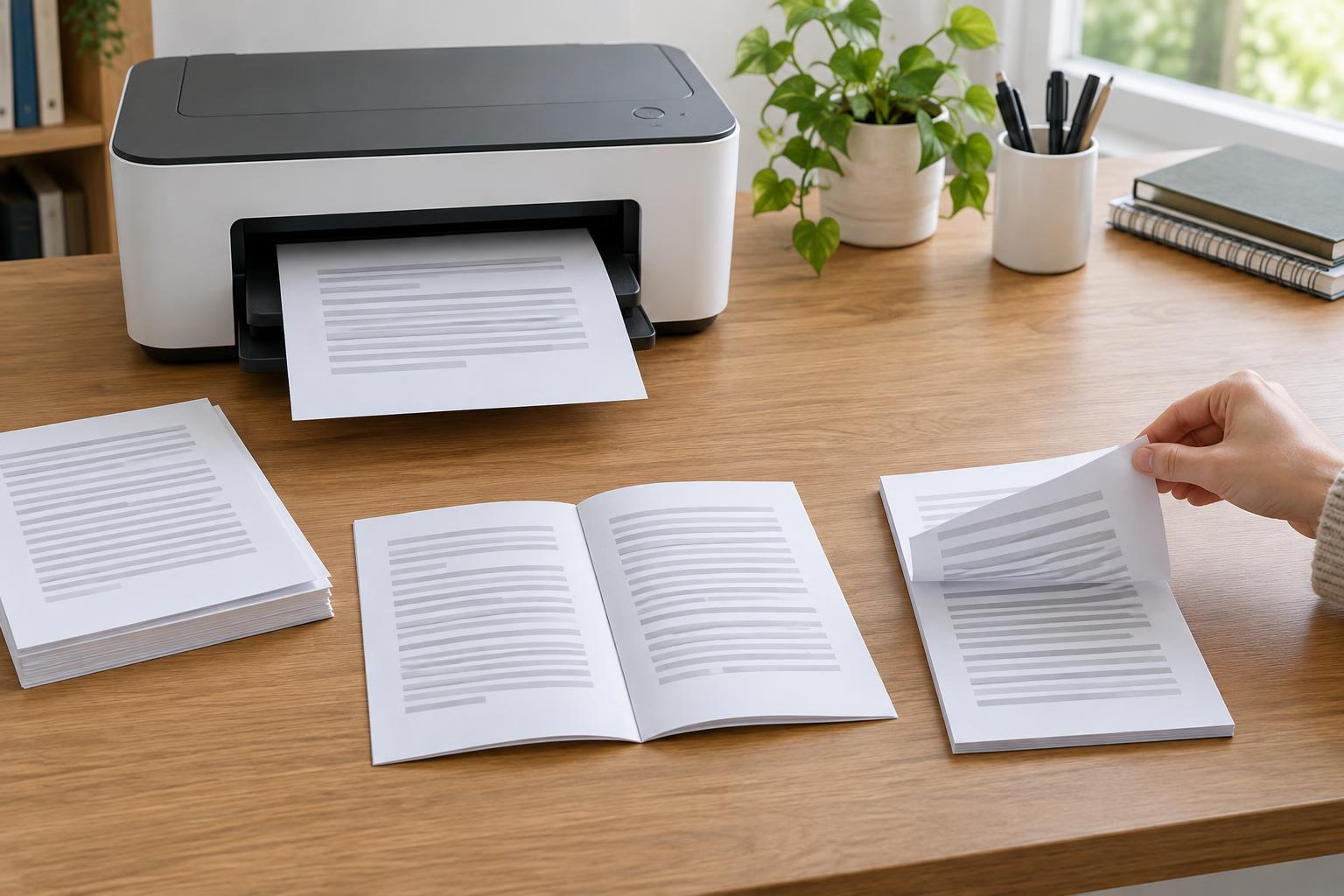
If you print shipping labels, place the printer close enough for convenient retrieval while leaving access to its paper path, controls and connections. Keep blank label stock clearly separate from ordinary paper. If you use a scale, give it a level, unobstructed spot and check that the whole parcel can rest on it as intended. A small parcel balanced against other supplies is harder to handle consistently.
Set aside a place for paperwork before packing begins. An order sheet, packing slip or address note should not disappear beneath filler and offcuts. A simple sequence helps: confirm the item, prepare the package, check the destination details, then apply the label. Check the applicable carrier’s instructions for packaging and labels when preparing a particular shipment; your station layout should make those checks easy rather than replace them.
Plan for finished parcels and a quick reset
Decide where sealed parcels go before the first one is ready. A marked shelf or clear floor area away from walking paths can separate outgoing packages from items still awaiting packing. If several people use the station, agree on a visible way to distinguish unfinished work from parcels ready to leave. Do not rely on where a package happens to be sitting to communicate its status.
At the end of a packing session, return tools to their places, clear scraps and offcuts, and note supplies that are running low. Leave the main surface open for the next parcel. This brief reset also gives you a chance to notice a label left on the printer or paperwork still waiting for a package. A practical station is one that is easy to use again tomorrow, not one that looks perfectly arranged only when it is empty.