Start with how the board will be used
A whiteboard for occasional reminders does not face the same demands as one used throughout the day for planning, teaching, or client meetings. Before comparing materials, decide how often you will write and erase, whether you need to attach papers with magnets, and who will clean the board. Also consider where it will hang: a board in a narrow home office may need to fit above a desk, while a shared workspace may benefit from a larger, easily visible surface.
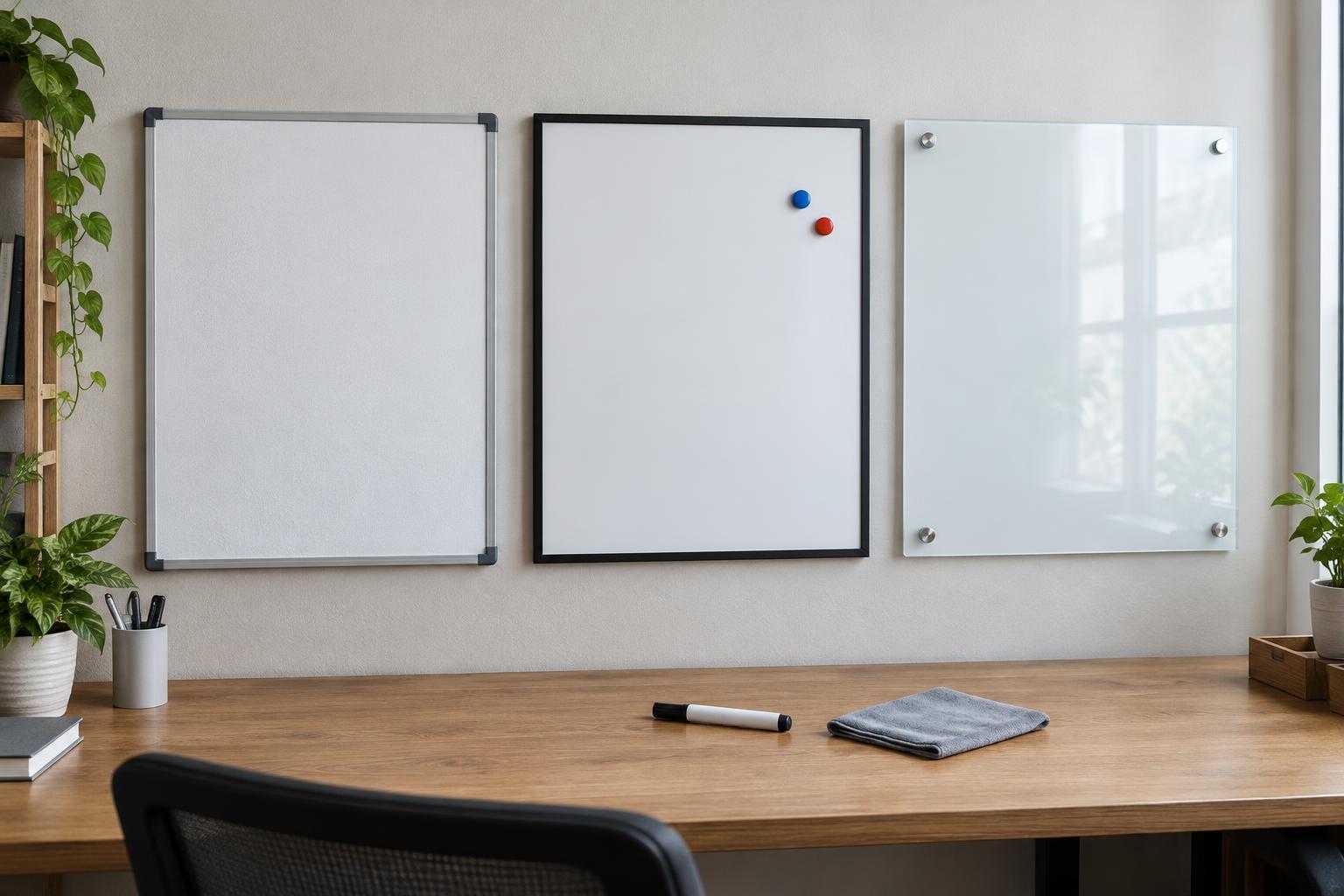
The three common choices are melamine, painted steel, and glass. All accept appropriate dry-erase markers, but their construction affects wear, cleaning, weight, and price. Product quality varies within each group, so treat the material as a starting point rather than a guarantee. Check the stated surface, mounting requirements, and warranty for the specific board you are considering.
Melamine: a simple choice for light use
Melamine boards typically have a dry-erase coating over a panel. They are often a lower-cost way to add writing space, which makes them appealing for a home office, a small team’s task list, or a board that is used only a few times a week. Many are relatively light and straightforward to mount, although size and backing still matter.
The trade-off is that the writing surface can become harder to erase as it wears, particularly if ink is left in place for long periods or cleaning is inconsistent. A melamine board may develop lingering marks, sometimes called ghosting, sooner than a more durable surface under heavy use. Do not assume it will hold magnets: that depends on whether the particular board includes a suitable metal backing. If you want to pin up printed schedules or reference sheets, confirm magnetic compatibility in the product description.
Painted steel: a versatile everyday option
Painted steel boards use a coated metal writing surface. They commonly offer a useful middle ground for offices that write and erase regularly without needing a premium surface. Because the writing face is steel, magnets generally work on it, making it convenient to keep a meeting agenda, checklist, or paper handout beside handwritten notes. If magnet use is important, still check the product details rather than relying on appearance alone.
The coating is what you write on, so its quality and care affect long-term performance. Painted steel can scratch or show ghosting if the surface is worn or cleaned with unsuitable materials. It is also worth distinguishing painted steel from porcelain-enamel steel: both may be magnetic, but they have different surface constructions and should not be treated as interchangeable when comparing prices or durability claims. For a frequently used team board, review the specific surface specification instead of choosing by the word “steel” alone.
Glass: easy to wipe, with more mounting considerations
Glass boards offer a smooth, nonporous writing surface that is generally easy to wipe clean. Their appearance can suit a meeting room or a workspace where the board is always in view. They often cost more than basic melamine or painted steel boards, and their weight makes mounting an important part of the purchase decision. Check the manufacturer’s hardware and wall requirements, especially for a large board or a wall with uncertain backing.
A standard glass panel is not magnetic. Some glass boards are sold as magnetic because they have a compatible backing, but magnets must work through the glass; ordinary magnets may not hold well, so use the type specified for that board. Visibility also deserves a check. Marker colors that look clear on an opaque board may be harder to read on glass against a busy wall or in a room with glare. A backing color, suitable markers, and thoughtful placement can make the writing more legible.
Match the surface to the job, then keep it clean
For an occasional personal reminder board, melamine may meet the need without adding much cost. For regular office planning that involves both writing and posting papers, magnetic painted steel is a practical option. For a prominent board that will be erased often, glass may be worth considering if its mounting, visibility, and magnet limitations suit the room. If your priority is a surface for intensive daily use, compare the specifications and care guidance of individual products rather than choosing on material name alone.
Whichever surface you choose, use markers and erasers intended for dry-erase boards, and remove writing routinely instead of leaving it for weeks. Follow the board maker’s cleaning instructions before trying a stronger cleaner, and avoid abrasive pads that could damage a coating. A quick test of sightlines, writing height, wall support, and nearby storage for markers will often do as much for daily usefulness as the surface choice itself.