Start with what the safe needs to protect
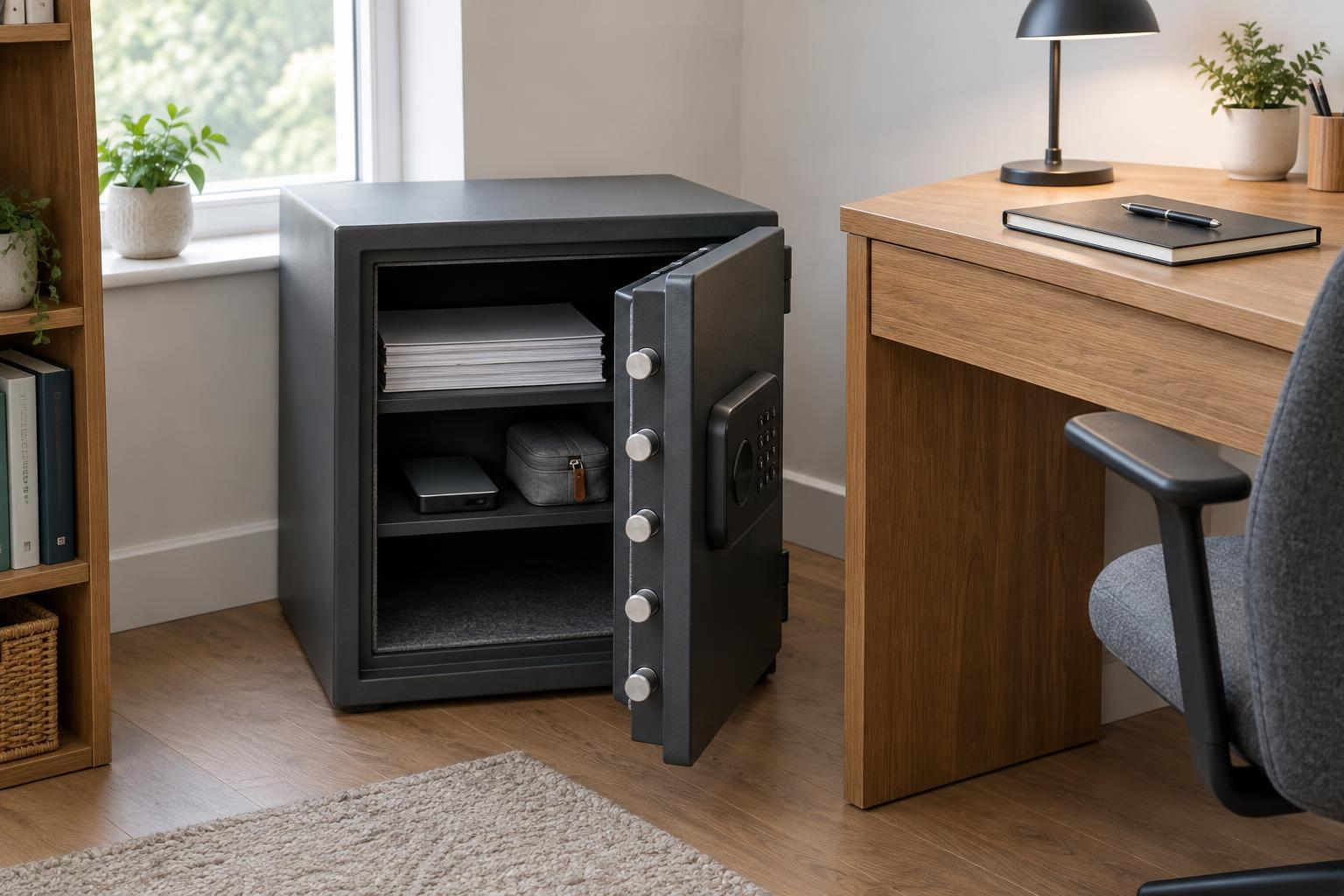
Before comparing safes, list what you plan to store. Paper contracts, passports, backup drives, spare keys, and small amounts of cash do not all need the same protection. A safe for paper records may be a poor choice for digital media, while a compact box meant to resist fire may offer little resistance to someone who can carry it away.
Consider how often you need access, too. Frequently used records benefit from a lock you can operate easily and enough room to remove folders without bending them. Items you rarely handle may be better suited to a less convenient but more secure location. Measure the contents, including any folders or cases, rather than relying only on the safe’s advertised exterior dimensions.
Read fire ratings as specific test results
A fire rating generally describes how a safe performed under a defined test, not a promise that its contents will survive every fire. Look for an independently tested classification that states both the duration and the type of contents protected. For example, a label using a Class 350 designation refers to an interior temperature limit intended for paper. Digital media may require a different, more restrictive classification because heat and humidity can damage it at conditions paper might withstand.
Check the exact wording on the product label or test documentation. Phrases such as “fire-resistant” or “fireproof” without a stated test standard and duration give you little basis for comparison. A longer test duration may be worthwhile if replacement would be difficult, but it does not eliminate other risks. Smoke, water used to fight a fire, and prolonged exposure after the tested period can still affect contents.
If you plan to store backup drives, verify that the rating expressly covers the type of media you use. Keeping a separate backup in another location is also sensible: no single safe protects against every fire, flood, theft, or equipment failure.
Understand what theft ratings do—and do not—say
Theft protection concerns resistance to forced entry, not survival in a fire. Recognized burglary classifications describe performance against specified tools and test conditions. A rating with a time figure refers to a controlled attack test; it should not be read as a guarantee that a burglar will need exactly that many minutes in a real office. Entry methods, available tools, and the way the safe is installed all matter.
Distinguish a certified burglary rating from a manufacturer’s general description such as “heavy-duty” or “security safe.” A sturdy-looking door or electronic keypad is not, by itself, evidence of a tested level of resistance. If a seller lists a certification, check that it applies to the complete safe and matches the model you are buying. For higher-value contents, an insurer may have its own requirements, so verify those before purchasing.
Weight and anchoring matter alongside the lock. A portable safe can be removed and attacked elsewhere. If the model supports anchoring, follow its installation instructions and confirm that the floor or other mounting surface is suitable. Drilling an unapproved hole or changing the safe’s construction could undermine its protection.
Compare the features you will use every day
Once the protection ratings meet your needs, compare usable interior space, shelf layout, door clearance, and lock operation. Fire-resistant walls can take up substantial space, leaving a smaller interior than the exterior suggests. Check that the door opens fully where you intend to place the safe and that you can retrieve the largest folder or box without unloading everything else.
Key, mechanical combination, and electronic locks each involve a trade-off. A key must be stored securely outside the safe; a mechanical dial avoids batteries but can take longer to open; an electronic keypad can be convenient but requires a plan for battery changes and access if the keypad stops working. Consult the manufacturer’s instructions before buying so you understand the available backup-access method rather than assuming one is included.
Choose a place and maintain a simple routine
Plan the safe’s location before it arrives. Check its dimensions, weight, delivery route, floor suitability, and any anchoring requirements. Avoid a spot where a leak is likely or where opening the door blocks normal work. For shared offices, decide who may open the safe and how keys or codes will be handed over when responsibilities change.
After installation, keep an inventory of what is inside, stored separately from the safe. Periodically check that the lock works, the door closes properly, and electronic-lock batteries are changed as directed. A well-chosen safe is one layer of protection: organized records, access control, and separate copies of irreplaceable information help it do its job.