Start with the shape of your available space
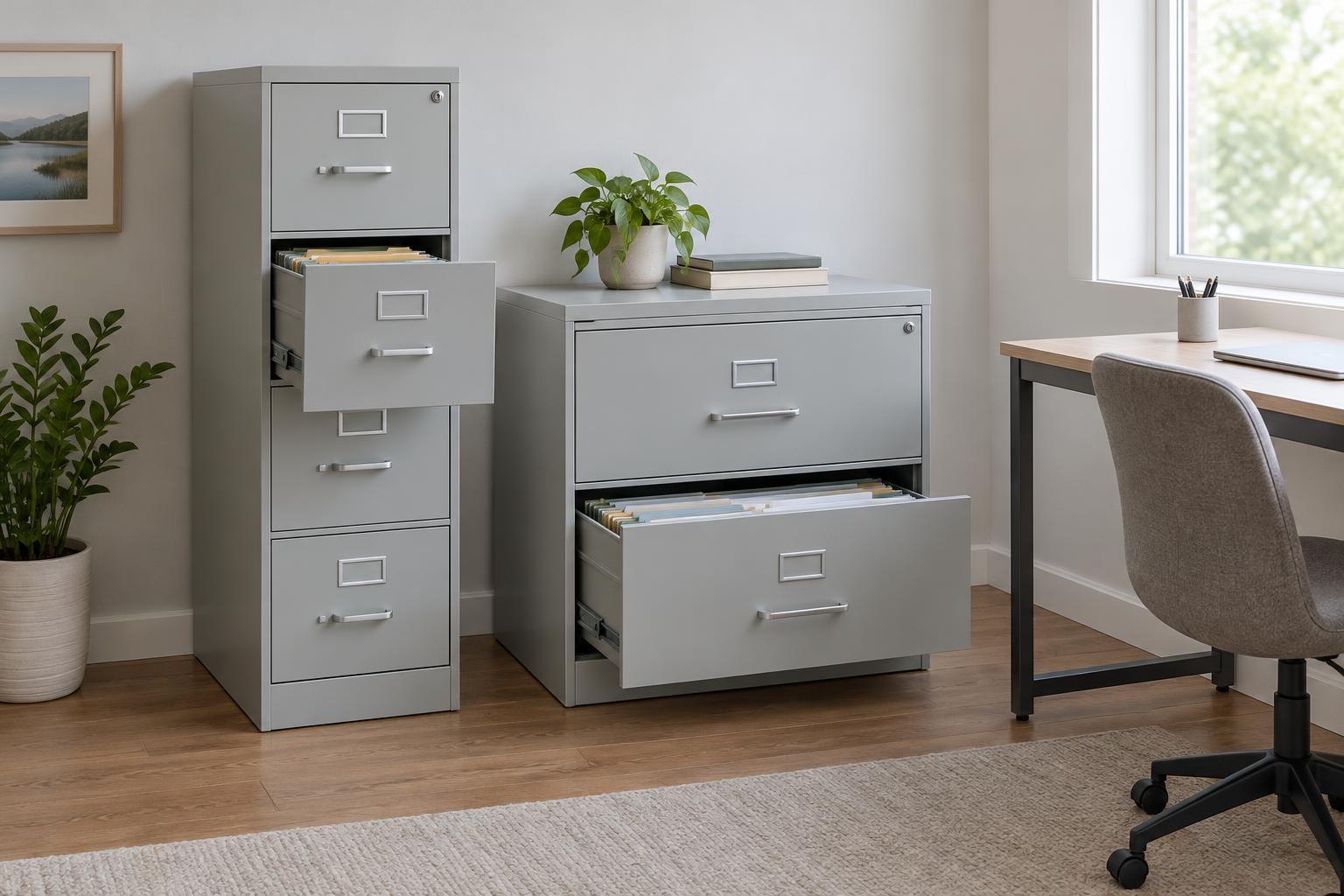
A vertical filing cabinet has relatively narrow drawer fronts and drawers that extend farther from the wall. A lateral cabinet is wider across the front, with drawers that are generally less deep. Neither shape is automatically more space-efficient: the better fit depends on both the cabinet’s footprint and the clear area needed to open its drawers.
Vertical cabinets can work well in narrow gaps beside a desk or along a short wall. Measure the full drawer extension before placing one near a chair, doorway, or walkway. Lateral cabinets need more uninterrupted wall width, but their shallower drawers may be easier to use where there is limited space in front. If you plan to place supplies or a printer on top, check the cabinet’s stated load limits rather than assuming its top is a suitable equipment stand.
Compare usable capacity, not just drawer count
Capacity depends on cabinet dimensions, drawer design, and how files are arranged. A tall vertical cabinet may offer plenty of storage while taking up little wall width. A lateral cabinet can provide a long filing run in each drawer, but its total capacity still depends on its height and interior layout. Two cabinets with the same number of drawers may hold noticeably different amounts of paper.
Before buying, check the internal filing dimensions and supported file formats. Letter-size and legal-size folders may require different rail positions or hanging-file frames. Some lateral drawers can be set up for files running side to side or front to back; others have fewer arrangement options. Allow room for folders to slide without being packed tightly, and keep especially heavy collections within the drawer and cabinet weight ratings.
Think about how often you retrieve files
For frequently used paperwork, easy access can matter more than maximum storage. A vertical drawer brings files toward you as it opens, which can make a single row straightforward to browse. Its deeper extension, however, may force you to step back or move your chair. A lateral drawer presents a wider span of files at once and may let you scan labels without reaching as far into the cabinet.
Consider who will use the files and how the cabinet will sit in the room. A wide lateral drawer needs enough side-to-side space for someone to work comfortably in front of it. Put active files at a comfortable height and archive material in less convenient drawers. Clear labels and a consistent filing order will usually save more time than a particular cabinet shape.
Check what the lock actually controls
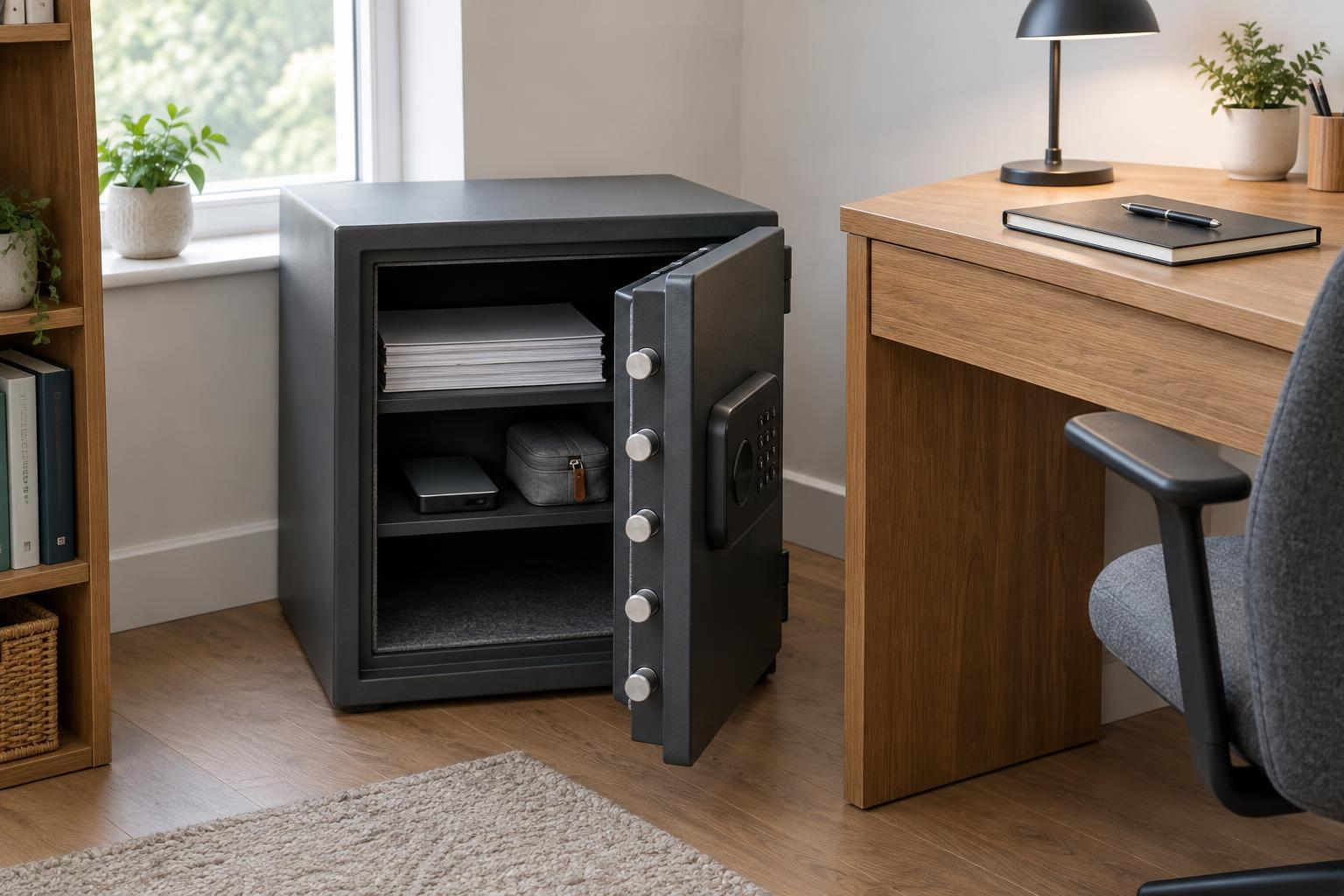
A locking cabinet can help restrict casual access, but locking features vary by model. One lock may secure all drawers together, while another design may lock drawers individually. Check whether every drawer is covered, whether the cabinet locks only when all drawers are fully closed, and how replacement keys are handled. If more than one person needs access, plan how keys will be stored and shared.
A cabinet lock is not the same as a comprehensive security system. For sensitive records, also consider who can enter the room, how long documents must be kept, and how they will be disposed of when no longer needed. If the manufacturer offers a choice of lock types, compare the everyday convenience and key-management needs of each rather than choosing by appearance alone.
Make a practical final check
Measure the wall space, drawer-opening clearance, and route into the room, including doors and stairs. Confirm the cabinet accepts your folder sizes and check its weight limits, drawer stops, and any anti-tip mechanism. Some cabinets limit how many drawers can open at once; follow the manufacturer’s setup instructions, including any guidance on leveling or anchoring.
Choose a vertical cabinet when narrow wall space and a deeper opening path suit your room. Choose a lateral cabinet when you have more wall width and want broad, relatively shallow drawers. If both fit, compare the specific models’ usable filing space and locks, then pick the one that makes your most common documents easiest to find and put away.