Find out which noise you need to address
Before buying anything, spend a workday noticing when sound becomes a problem. Is it traffic through a window, conversation outside the door, a printer starting during calls, or your own voice echoing around the room? These problems need different fixes. A soft rug may reduce the hollow sound of a room, but it will do little to stop traffic noise coming through a window.
It helps to separate three goals: keeping outside noise from reaching you, making sounds within the room less distracting, and making your voice clearer to people on calls. You may not be able to make a shared home silent, but you can often improve one goal at a time. Start with the interruptions that happen most often or matter most to your work.
Use the room layout to your advantage
If you can move your desk, try placing it away from the loudest wall, door or window. A desk beside a hallway may put every passing conversation close to your microphone. Moving even to the other side of the room can change what you hear. For calls, face a relatively quiet part of the room rather than directing your voice toward an open doorway.
Close a door during focused work where practical, and check for obvious gaps or rattles. A door that latches properly is more useful than one left slightly open. If another room is available for important calls, test it before assuming the largest room is best: a smaller, furnished space may sound less echoey. Keep ventilation and safe access in mind rather than sealing a workspace completely.
Reduce echo without confusing it with soundproofing
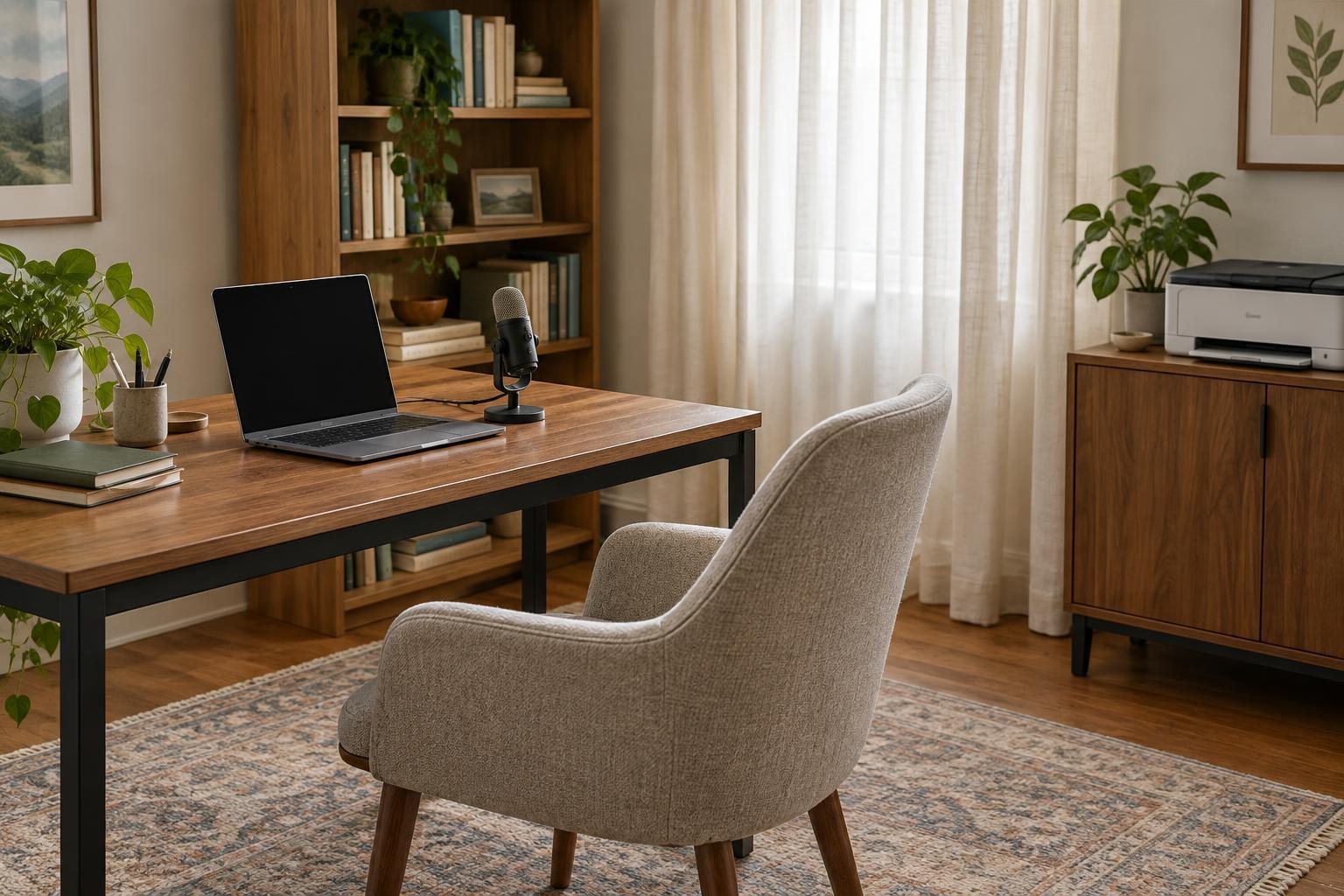
Hard floors, bare walls and empty corners can make speech sound sharp or hollow. Curtains, a rug, upholstered furniture and a filled bookcase can help soften reflections. You do not need to cover every surface. Add items where they fit the room and listen for a noticeable change when speaking at your usual call volume.
These changes mainly affect sound bouncing around inside the office; they are not a reliable way to block a neighbor's music or outdoor traffic. If outside noise is the main issue, check whether windows and doors close properly, then consider whether a different desk location is possible. Treat advertised “acoustic” products with the same distinction in mind: a panel intended to reduce echo may not prevent sound from entering the room.
Make calls clearer at the microphone
For people on the other end of a call, microphone position can matter more than making the entire room quiet. A headset or a microphone placed close to your mouth generally has less room sound to pick up than a laptop microphone across the desk. Position it according to its instructions, then make a short test recording at normal speaking volume. Listen for keyboard taps, fan noise and changes in volume as you turn your head.
Call software may offer noise suppression, but it can sometimes affect how your voice sounds. Test the setting rather than assuming the strongest option is best. If you share your home, a simple call schedule or closed-door signal may prevent interruptions more effectively than another device. Muting when you are not speaking also keeps occasional background sounds out of the conversation.
Control equipment noise and protect focus
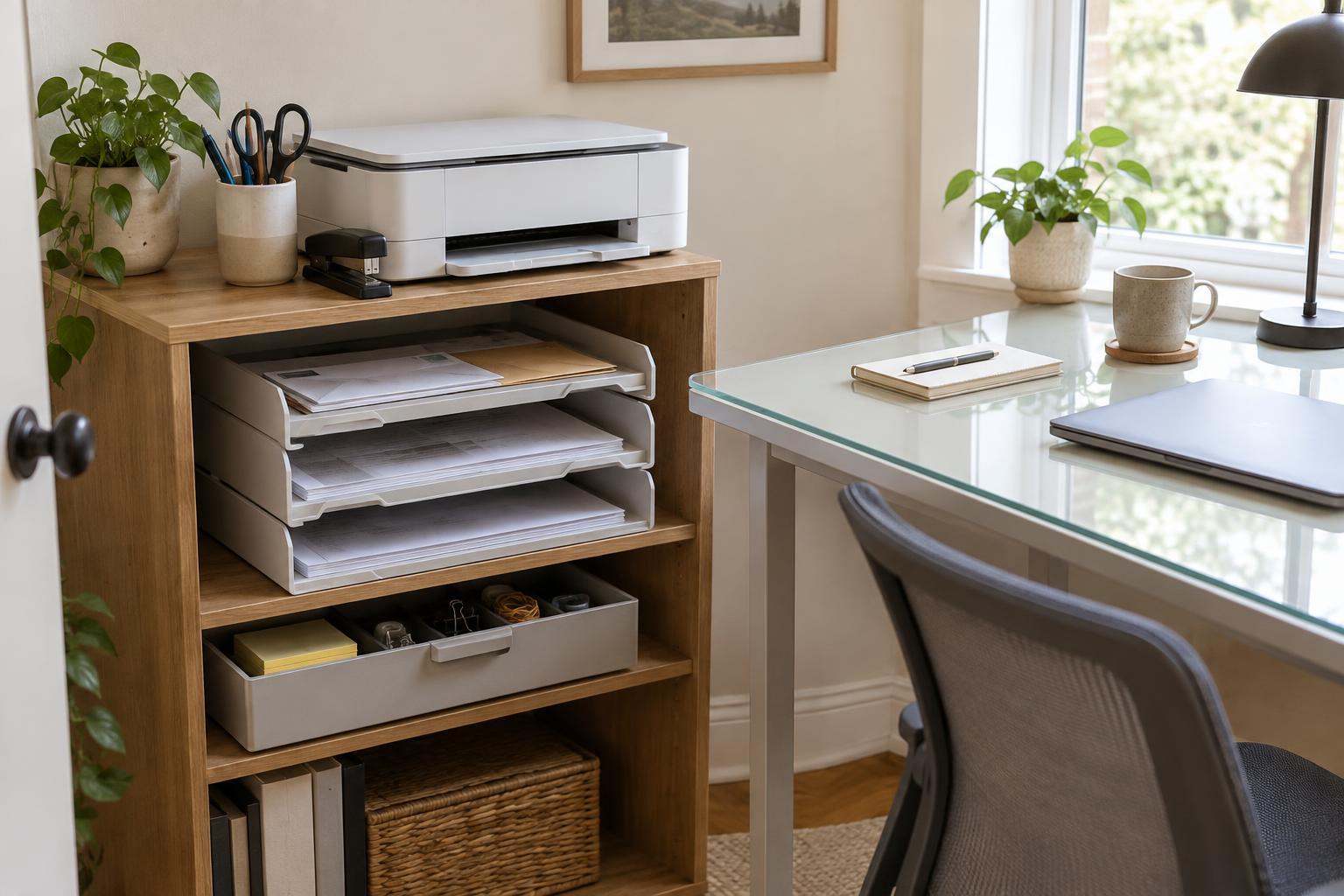
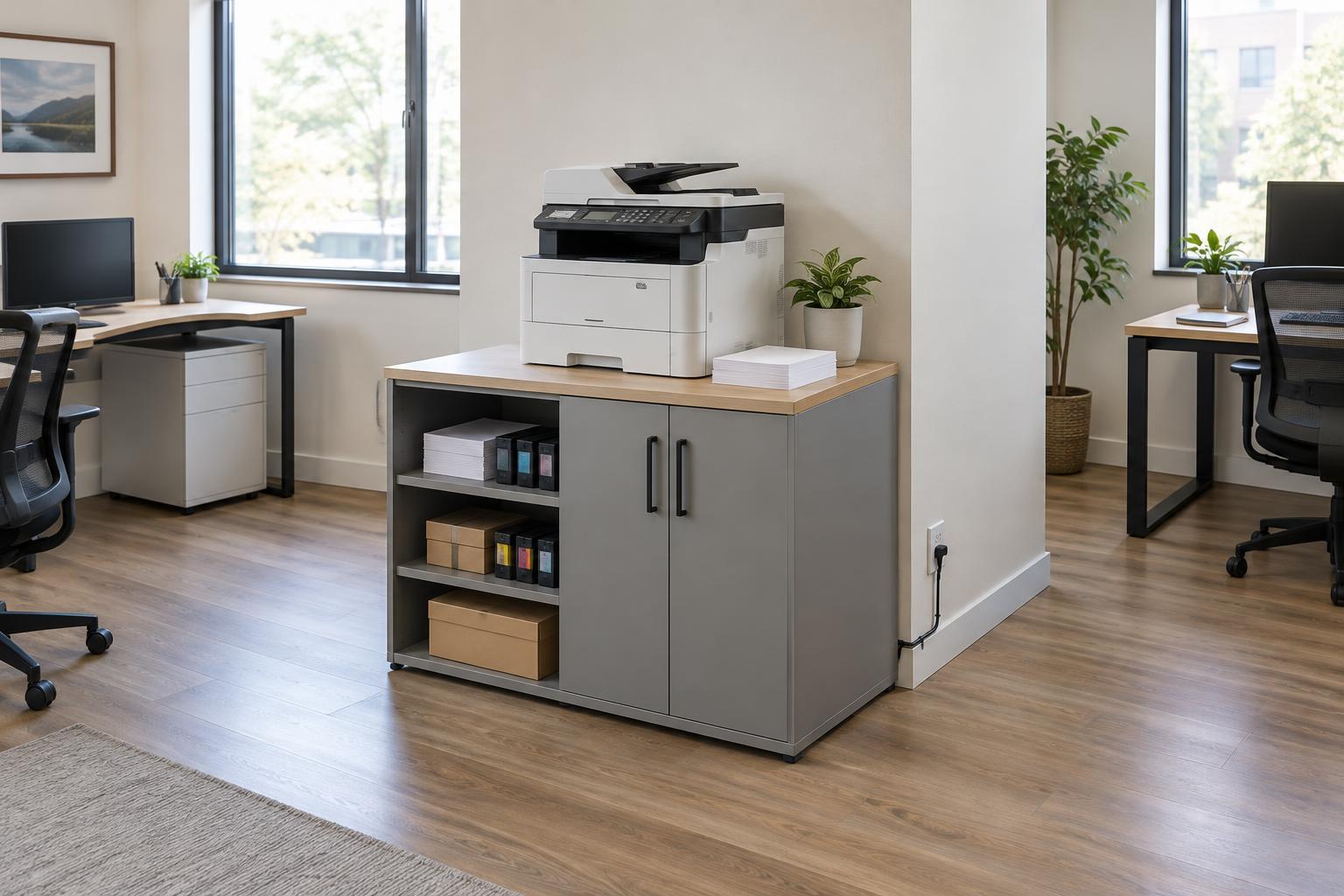
Printers, scanners, computers and desk fans can create brief or steady distractions. If a printer does not need to sit beside you, put it on a stable surface farther from your desk, while keeping its connections, ventilation and access practical. Batch nonurgent printing or scanning between calls. For a humming computer, check that vents are clear and that it is not pressed against papers or fabric; avoid covering equipment to quiet it.
Finally, make a routine that suits the sounds you cannot remove. Schedule concentration-heavy work for quieter periods when you can, silence unnecessary device alerts, and let others know when a call requires minimal interruption. If you use background sound or headphones, keep the volume comfortable enough to remain aware of anything important around you. The best setup is not necessarily silent: it is one that makes speech understandable and interruptions manageable.