Start with what you reach for
Storage near a desk should make work easier, not simply hold as much as possible. Before choosing shelves or cabinets, notice what you use during an ordinary work session. A notebook you open several times a day has a different storage need from a box of replacement printer supplies you might not touch for weeks. The most useful distinction is often frequency: keep daily items within comfortable reach, occasional items nearby, and rarely used items farther away.
Also consider what happens when you retrieve something. If you need to see a range of folders to choose the right one, open shelving may help. If you need a clear surface to sort papers, a drawer or cabinet may be better because it frees the desk without putting every paper on display. Give each item a home that fits the task, rather than expecting one type of storage to solve everything.
Where open shelves work well
Open shelves are useful for items you want to identify at a glance: labeled project binders, a small set of reference books, or a tray of supplies used throughout the day. There is no door to open, which can make access convenient in a tight work area. Shelves can also use wall space above or beside a desk when floor space is limited. Keep frequently used items at a height you can reach without stretching or moving your chair awkwardly.
The trade-off is exposure. Papers and supplies on open shelves can collect dust, and a crowded shelf may make it harder to spot what you need. Visible storage also becomes part of the room’s appearance, which matters if your desk is in a shared living area or appears behind you on calls. Use a few labeled containers for small items, but avoid turning every shelf into a row of miscellaneous boxes. If a container hides its contents, label it clearly.
What closed storage does better
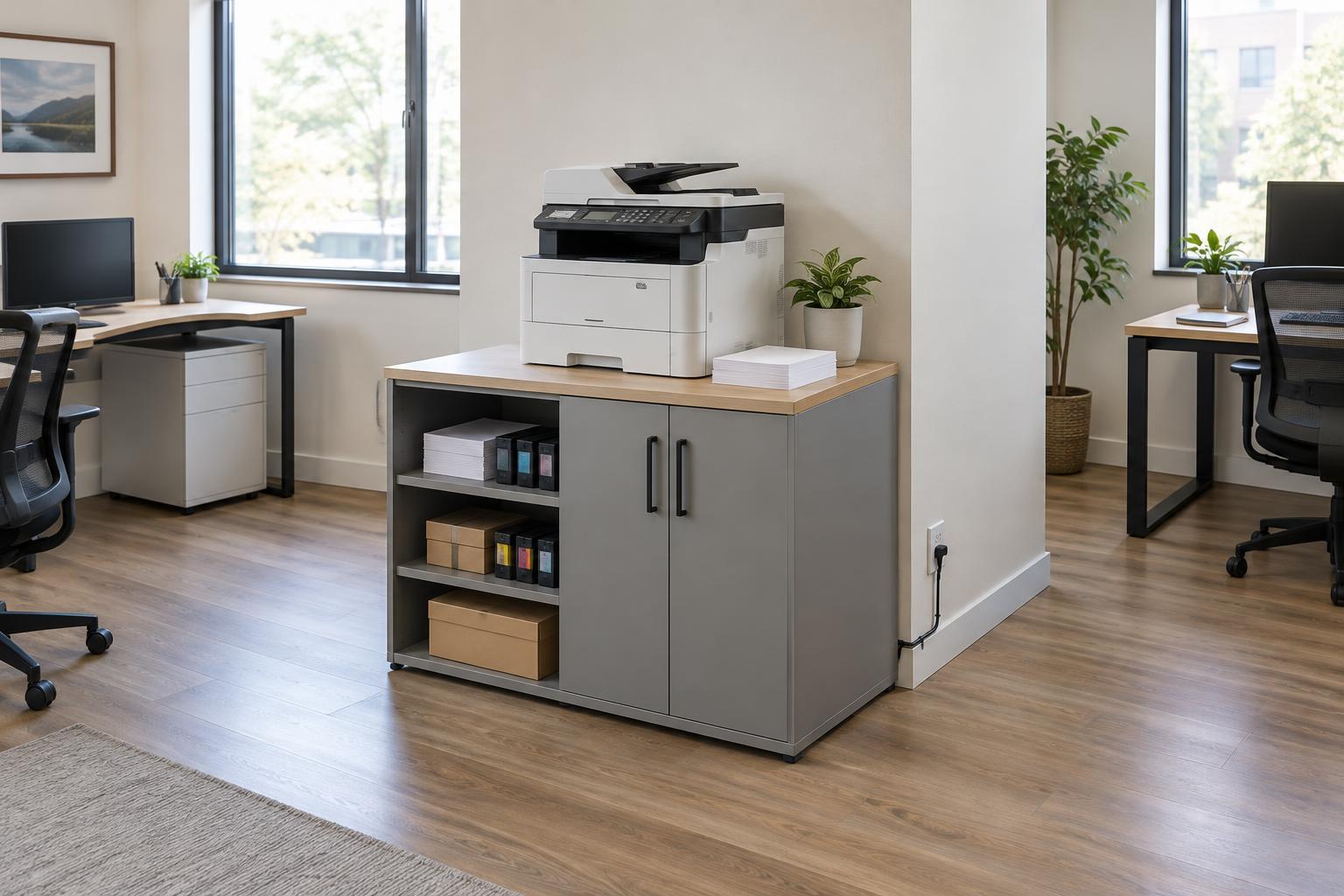
Drawers and cabinets are well suited to loose supplies, spare cables, archived folders and other items that would make an open shelf feel busy. They can help keep papers away from casual view and reduce dust on stored objects. A shallow drawer with dividers often works better for pens, labels and adapters than a deep drawer where small items collect at the bottom. For paperwork, use folders or trays inside the cabinet so closing the door does not become a substitute for sorting.
Closed storage is not automatically secure storage. If documents contain personal, customer or business information, choose an appropriate location and access controls for your situation; a cabinet door alone may only provide privacy from view. Check the physical space, too. Doors and drawers need room to open, and a cabinet beside your chair can obstruct movement if the aisle is narrow. Measure both the unit and the clearance needed to use it.
Give paper and equipment different rules
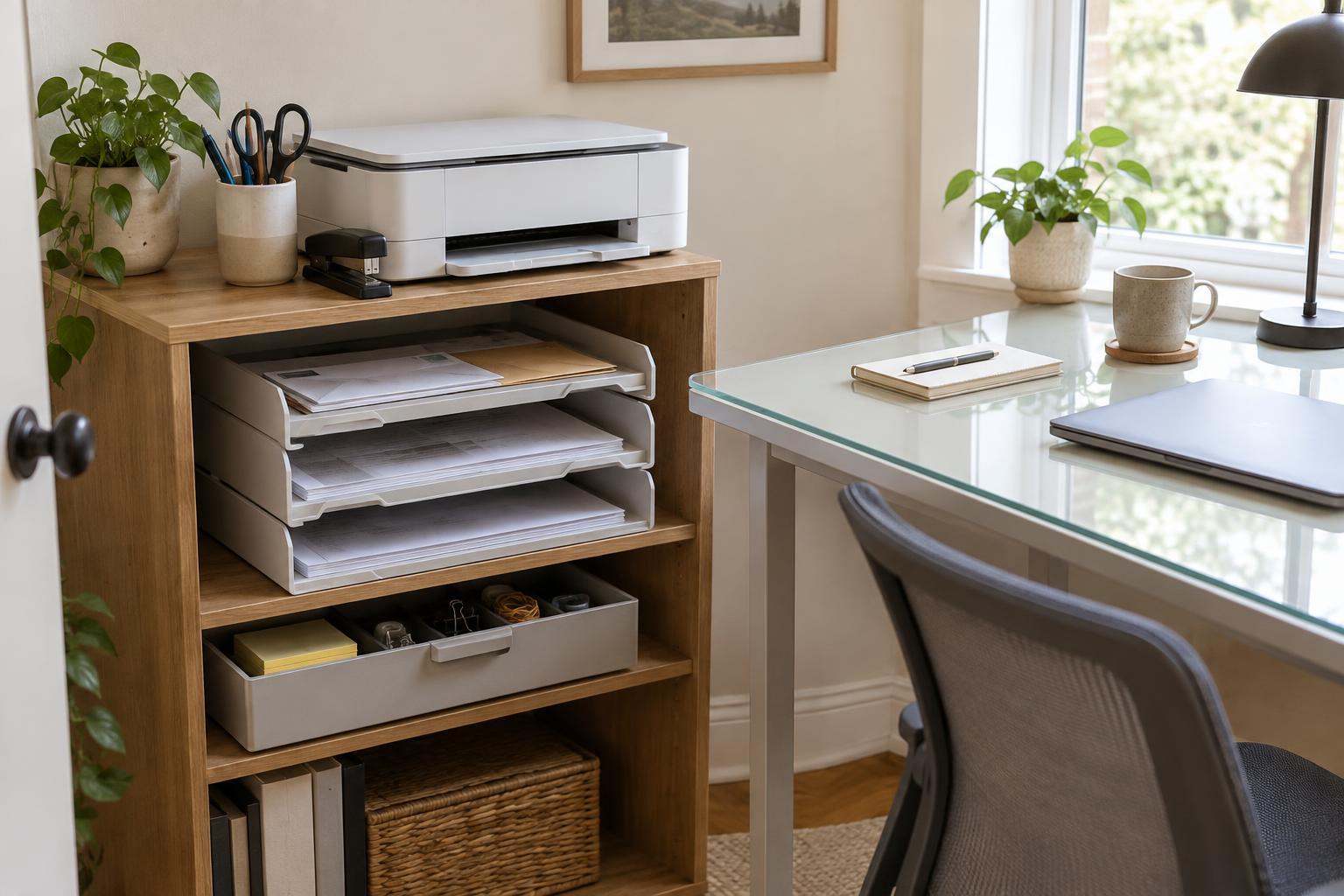
Active documents benefit from a simple, visible workflow. You might keep one clearly labeled tray for incoming papers and another for items awaiting a response, then file completed work in a drawer or cabinet. Limit the open area to work that is genuinely in progress. If a stack stays untouched for weeks, move it into a named folder or decide whether it still needs to be kept. This prevents a shelf from becoming a second, less organized desktop.
Equipment needs its own placement test. A printer or scanner should be reachable enough to load paper, clear a jam and retrieve output without shifting other objects. Leave the clearance specified in its manual for ventilation, covers and trays; an enclosed cabinet may not be suitable while the device is running. Keep spare paper and consumables protected from spills and excessive moisture, but not so far away that a routine refill interrupts your work.
Build a small mixed system
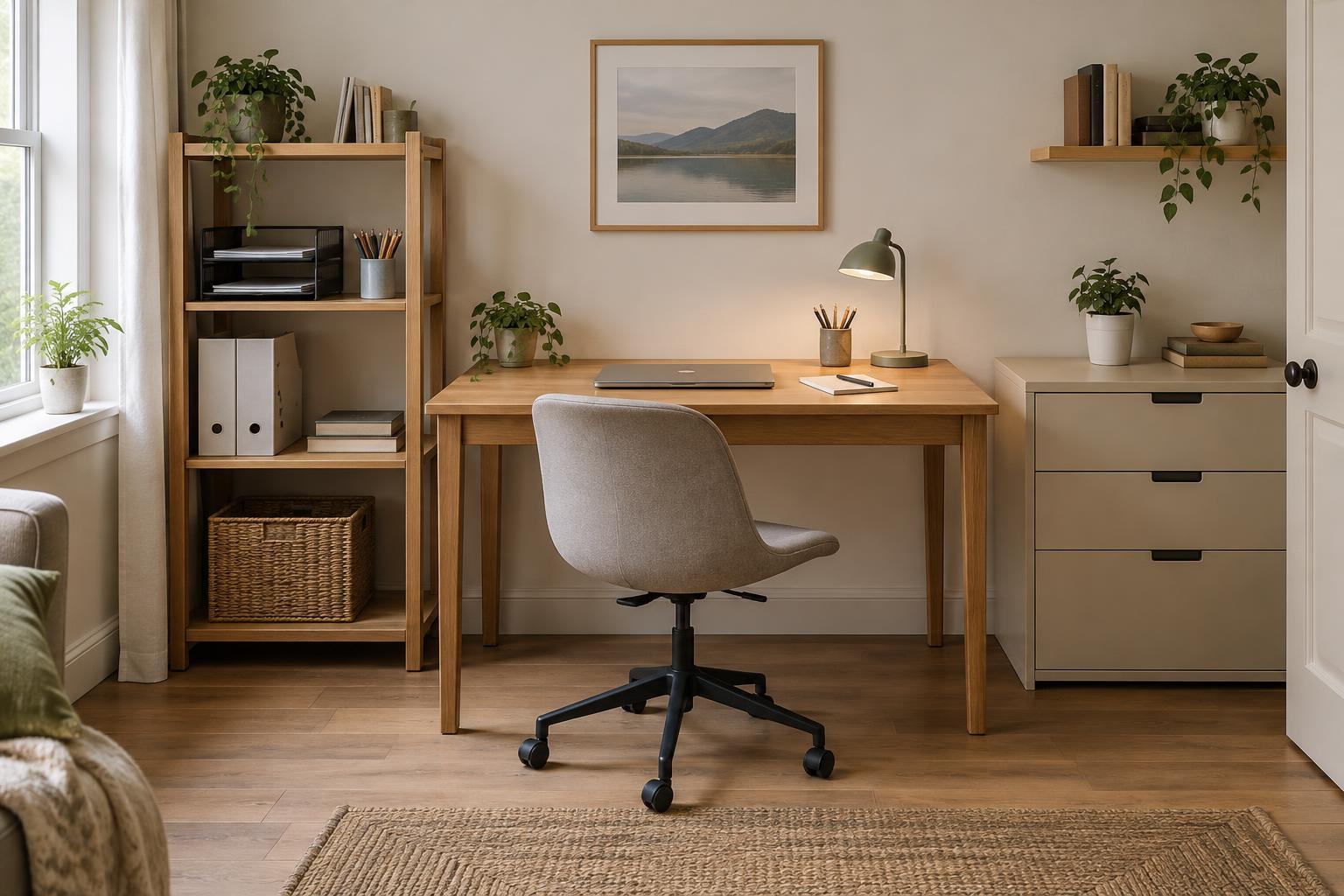
For many desks, the practical answer is a mix: a modest open shelf for current reference material, a drawer for small supplies, and closed space for completed files and backups. Place heavier items on lower shelves, and avoid stacking materials where they could fall onto your work area. If you share the workspace, labels and consistent locations make it easier for everyone to return items without asking where they belong.
Try the arrangement before buying more furniture. Clear the desk, group nearby items by task and assign each group a location based on how often you use it. Work with that setup for a while, then note what repeatedly ends up on the desk. Those items may need a closer home, while storage you rarely open may be taking up valuable space. A good setup is not perfectly empty or perfectly concealed; it lets you find, use and put away what your work requires.